
Categories
Real EstatePublished April 30, 2026
5 Things I Check on Every Showing Because I'm a Builder, Not Just a Realtor

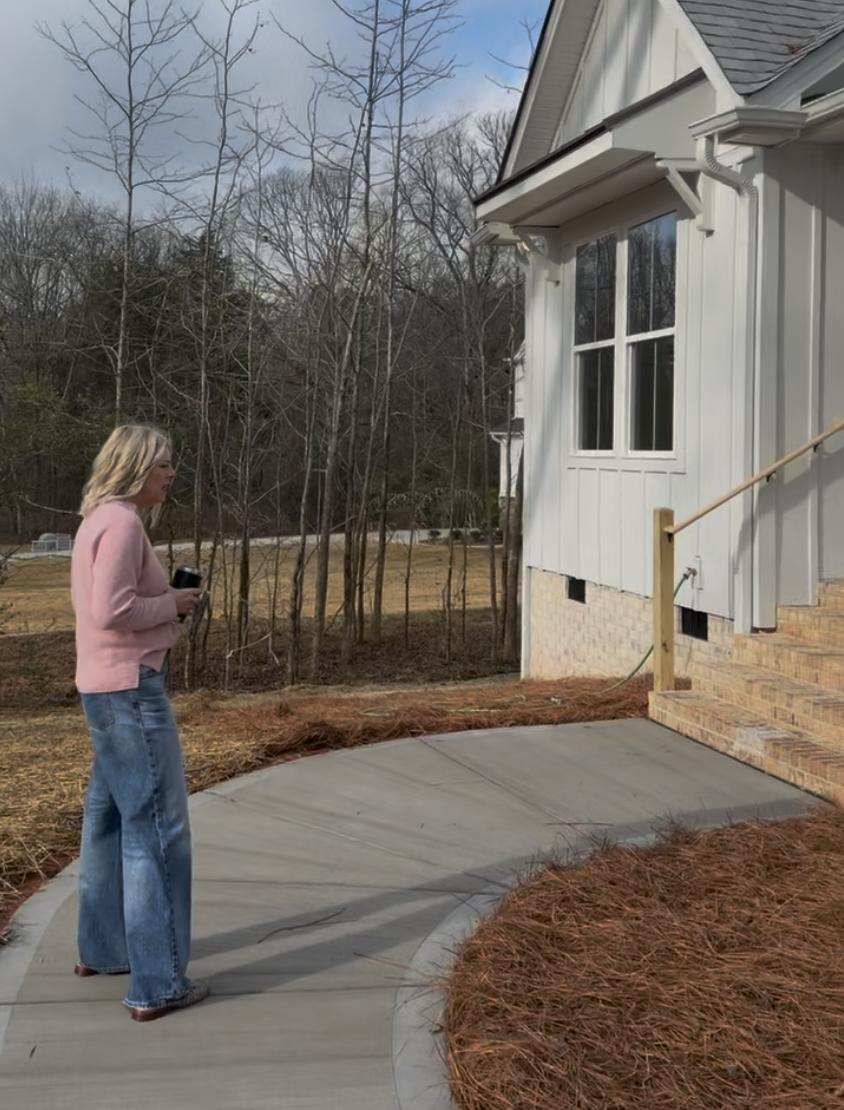
5 Things I Check on Every Showing Because I'm a Builder, Not Just a Realtor
Written by Kristin Vining | The Vining Group at eXp Realty | Fort Mill, SC
Most agents walk a buyer through a home and notice the finishes. The kitchen island. The owner's bath. The paint colors. I notice those too — I've designed and built my own home, I'm wired to look at finishes.
But while my buyers are falling in love with the chef's kitchen, I'm looking at five other things they're not. Because falling in love with a house is easy. Falling in love with a house that turns into a money pit — that's the part I'm trying to prevent.
Here are the five things I check on every showing because of the years I've spent on the building side, not just the selling side.
1. The Crawlspace
I'm not just sticking my head through the door and calling it a day. I'm going in. With a flashlight, in clothes I don't mind getting dirty, all the way to the back corner.
What I'm looking for: standing water or recent water staining on the dirt floor. The condition of the vapor barrier — is it intact, taped, and lapped properly, or is it shredded and lifting. Whether there's any rust on the piers or the support posts. Wood rot or moisture staining at the sill plate. Insulation falling out of the floor joists. Visible mold growth on the framing. Sagging beams.
And the thing nobody else looks at — whether the HVAC ductwork in the crawlspace is properly sealed and supported, or just sagging on the dirt soaking up moisture every summer. That ductwork is the air your kids are breathing. If it's sitting in a damp crawlspace, that air isn't clean.
A bad crawlspace doesn't have to be a deal-killer. But it does have to be priced into the offer.
2. The Attic
Same drill, opposite end of the house. I'm going up. With a flashlight.
What I'm looking for: insulation depth and consistency — in our climate zone we want to see substantial coverage, evenly distributed. Bare spots tell me the previous insulator did a sloppy job or rodents have been at it. Stains on the underside of the roof decking — those are leak histories, and the location tells me where. Proper ventilation — soffit vents that aren't blocked by insulation, ridge venting that's actually doing its job. Bath vent fans that are exhausting outside the house, not just into the attic where the moisture they're meant to remove condenses on the underside of the roof.
That last one is shockingly common in older homes. People run their bath fan, feel good about it, and have no idea they've been pumping moisture into their attic for fifteen years.
3. Foundation Grading and Drainage
This one I do from the outside, and I do it slowly. I walk the entire perimeter of the house.
What I'm looking for: does the dirt slope away from the foundation, or has settling created low spots where water is going to pond against the brick? Are the gutters intact, properly pitched, and clean? Where do the downspouts discharge — straight onto the foundation, into a splash block, or into a buried drain that takes the water somewhere useful?
I'm also looking at the brick or siding right where it meets the ground. If I see staining, efflorescence (that white powdery residue), or moss growing on the lower courses of brick, that's water sitting where it shouldn't.
Here's why this matters: 90% of foundation problems start as drainage problems. If you fix the drainage early, you don't get the foundation problem. If you ignore the drainage for fifteen years, you get a foundation problem you can't fix for under five figures.
This is something I learned the hard way on the building side, not the selling side. I now run drainage as a non-negotiable line item on every OZ Custom Homes build — proper grading, proper gutters, proper downspout discharge — because it's so much cheaper to do it right at the build than to fix it ten years later.
4. The Electrical Panel
I open it. Or I look closely at the cover and the manufacturer's label if I can't open it. And the first thing I'm checking is the brand.
There are a few panel brands that are essentially uninsurable in our market right now — Federal Pacific (FPE), Zinsco, and certain older Stab-Lok panels are the big ones. They have known failure modes — breakers that don't trip when they should — that have caused house fires. Some insurance carriers won't write a policy on a home with one of these panels installed. That alone is a deal-changer.
I'm also looking at: the age of the panel (anything pushing 40 years is end-of-life regardless of brand), whether there's room for additional breakers if the buyer wants to add a hot tub or a charger or finish the basement, evidence of double-tapped breakers (one breaker feeding two circuits, which is a code violation in most situations), and rust or scorching on the bus bar.
None of this is in the listing photos. None of this is in the home description. But it can swing the value of the home by $3,000 to $8,000 if the panel needs to be replaced.
5. Water Staining Patterns
This is the most underrated thing on the list and it costs nothing to do. I look up. And I look at corners and seams.
What I'm tracking: any discoloration on a ceiling, anywhere in the house. Any hairline crack at a drywall seam — especially the seam between a ceiling and a wall, or where two walls meet at a corner. Any bubbling, peeling paint, or texture that doesn't quite match the surrounding drywall.
Each of those things is a story. A round stain on a ceiling under a bathroom is probably a plumbing leak — past or present. A long stain along a wall under a window is almost certainly a window or flashing leak. A stain in the corner of a master closet that backs up to an exterior wall is often a roof or eave issue. A crack at a drywall seam that runs at a 45-degree angle from a window or door corner is often a settling indicator.
The reason this matters: a fresh coat of paint hides everything. Sellers paint before they list, often specifically to obscure these signals. If I see a beautifully painted home where one ceiling area has a slightly different sheen than the rest of the room, my brain goes somebody just painted over a stain. And then I want to know what's above that ceiling and whether it's been fixed or just covered up.
[INSERT PHOTO: Composite — crawlspace flashlight view, attic insulation, foundation grading, electrical panel close-up, ceiling stain]
Why This Matters for Your Search
None of this is meant to scare you out of buying a home. Every home — including the one I designed and built and live in — has things you'd find if you looked hard enough. The point isn't to find the "perfect" home. The point is to know exactly what you're buying so you can either negotiate the price, ask for repairs, walk away, or write the offer fully informed.
That's the difference between an agent who sells houses and an agent who has actually built them. I've stood on the framing side of every one of these problems before I ever stood on the selling side of them. So when I walk a home with a buyer, I'm not guessing what's behind the drywall — I'm telling you what's likely there based on what I've seen on hundreds of job sites.
That's not a sales pitch. That's just how we do things at The Vining Group at eXp Realty. My husband Ken handles a lot of our buyer-side work, and he and I walk these properties together when the stakes are high. Different eyes. Same standard.
If you're house-shopping in Fort Mill, Tega Cay, Lake Wylie, Indian Land, or anywhere in the Charlotte metro and you'd rather have a builder's eyes on the home before you write an offer — let's talk. I'd rather have an honest conversation about a house up front than help you negotiate out of a contract three weeks later.
Kristin Vining is a licensed Realtor and custom home builder with The Vining Group at eXp Realty, partnered with OZ Custom Homes in Fort Mill, SC.
📧 kristin@teamvininggroup.com
🌐 teamvininggroup.com
📸 @KristinVining
|


or another way