
Categories
Design, New constructionPublished April 8, 2026
Paint Sheens Explained: A Builder's Guide | Fort Mill SC

Paint Sheens Explained: A Builder's Guide | Fort Mill SC
You've spent weeks — maybe months — agonizing over the perfect paint color. You've held up a dozen swatches. You've looked at them in morning light, afternoon light, lamplight. You've driven your partner slightly crazy. And then you get to the paint counter and someone asks, "What sheen would you like that in?" And suddenly you're frozen. Flat? Matte? Satin? Semi-gloss? What does any of that even mean?
I get it. And I'm going to walk you through exactly what you need to know — because here's the reality: the wrong sheen can make the right color look completely wrong. I've been building custom homes in Fort Mill, SC for years, and I can tell you that sheen selection is one of the most overlooked decisions in any home project. I just sat down with our Sherwin-Williams rep to go over all the latest on finishes, product lines, and what's performing best in the field right now — and I want to share what I learned. Let's dig in.
What Is Sheen, Exactly?
Sheen is simply how much light a painted surface reflects. The more sheen, the shinier the finish. The less sheen, the more matte and velvety. And here's the thing most people don't realize — sheen doesn't just affect how the wall looks. It affects how the color reads, how durable the surface is, and how easy it is to clean. A color can look completely different in flat versus semi-gloss because higher sheens reflect more light, which makes colors appear slightly lighter and more vibrant. Lower sheens absorb light, giving you a deeper, more saturated look.
That means the same color can feel like two different colors depending on the sheen you choose. And that matters — especially when you're designing a whole-home palette like we do for our custom builds here in Fort Mill and Indian Land.
One more important thing — and this came up in my conversation with our Sherwin-Williams rep: higher sheens show more surface imperfections, and this is especially true with darker colors. If you're going with a rich, moody shade like Rock Bottom or Inkwell from the Restorative Darks palette, every bump, seam, and patch in your drywall becomes more visible as you increase the sheen. Dark colors amplify imperfections that lighter colors might hide. So your prep work — and your sheen choice — matter even more when you're going dark.
The Sheen Lineup: From Flattest to Shiniest
Flat (Matte)
Flat paint has zero shine. None. And that's exactly why it's so good at hiding imperfections — drywall seams, minor texture issues, old patches. It gives you the richest, most saturated color because it's absorbing all the light instead of bouncing it back. In our custom homes, I almost always spec flat for ceilings. It creates a clean, seamless look overhead without any distracting glare from recessed lighting.
But here's the trade-off — traditional flat paint is the least durable and the hardest to clean. If your toddler runs a crayon across a flat-painted wall, you're probably repainting, not wiping. I've seen homeowners try to scrub flat walls and end up with burnish marks that look worse than the original stain. However — and this is a big however — newer premium lines like Sherwin-Williams Emerald and Duration Home have specially engineered matte finishes that wash clean almost like a semi-gloss. It's genuinely game-changing technology. More on those products in a minute.
Eggshell
Eggshell has a soft, velvety glow — like the surface of an actual eggshell — that adds just enough warmth and depth without looking shiny. It's more durable than flat, it resists dirt and grime better, and it cleans up reasonably well with a damp cloth.
I spec eggshell for a lot of wall surfaces in our Fort Mill custom homes — living rooms, dining rooms, bedrooms, hallways. It's the sweet spot between looking beautiful and being practical. One thing to know: eggshell will show imperfections more than flat, so your drywall work needs to be solid. That's something we're always on top of with our builds — because nobody wants to see a seam through their beautiful new paint job.
Satin
Satin steps up the sheen a notch. It has a pearl-like finish with noticeably more light reflection than eggshell, and it's more durable and washable. Satin is fantastic for high-traffic areas — kitchens, family rooms, mudrooms, kids' bedrooms. Anywhere that's going to take a beating and needs to be wiped down regularly.
The catch? Satin is less forgiving of surface imperfections than eggshell. Every bump, patch, and drywall inconsistency becomes more visible. That means your prep work — sanding, priming, patching — has to be dialed in. In new construction, this isn't usually an issue. But if you're painting over existing walls in an older home here in Rock Hill or Tega Cay, you'll want to invest in thorough prep before going with satin.
Semi-Gloss
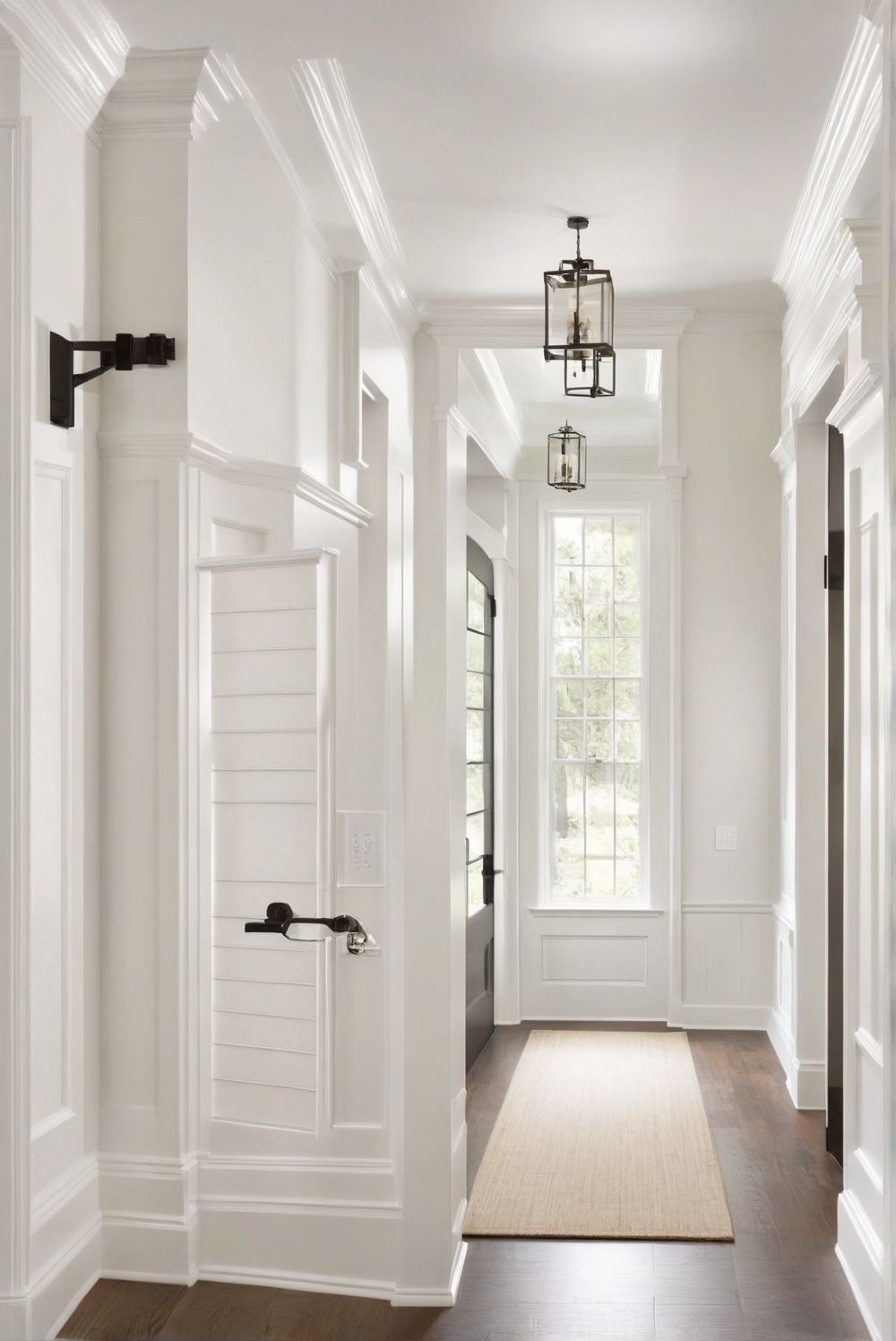
Now we're getting shiny. Semi-gloss reflects a significant amount of light and creates a bright, clean, almost slick-looking surface. It's incredibly durable, moisture-resistant, and easy to scrub clean. This is the go-to sheen for trim, baseboards, doors, window casings, and cabinetry. In our custom homes, I spec semi-gloss for all millwork — it holds up to constant contact and cleaning, and it creates a beautiful contrast against lower-sheen walls.
Semi-gloss on walls? I'd be cautious. It highlights every single imperfection, and in a room with a lot of natural light — which we get plenty of here in the Charlotte metro — it can feel almost too reflective. That said, it's a smart choice for bathrooms and laundry rooms where moisture resistance is a priority.
High-Gloss
High-gloss is the most reflective finish available — almost mirror-like. It's stunning on the right surface, like a front door, a built-in bookcase, or a statement piece of furniture. It's also the most unforgiving sheen in existence. Every brush stroke, every surface flaw, every speck of dust shows. Professional application is basically non-negotiable for high-gloss.
I don't spec high-gloss often in our builds, but when I do, it's intentional and dramatic. A glossy black front door on a white farmhouse exterior? Chef's kiss.
The Product Lines: Cashmere, Duration, and Emerald
Here's where things get real — because sheen is only half the conversation. The product line you choose determines the quality, durability, and feel of that sheen. And this is something I went deep on with our Sherwin-Williams rep. At The Vining Group, we work almost exclusively with three Sherwin-Williams lines, and each one has a specific role in our builds.
Cashmere: My Go-To for Walls
If you've ever felt a wall painted with Cashmere, you know why it has that name. It goes on buttery smooth — almost like spreading silk — and it self-levels beautifully, which means roller marks and brush strokes practically disappear. The finish looks sprayed even when it's rolled. It's available in flat enamel, low-lustre, medium-lustre, and pearl, and every one of those sheens has a soft, refined quality that I haven't found in any other line.
I spec Cashmere for most interior walls in our custom homes. The flat enamel is gorgeous for ceilings and low-traffic rooms. The low-lustre — which sits between flat and eggshell — is my sweet spot for bedrooms, living rooms, and dining rooms. It's scrubbable, it touches up beautifully, and it has this quiet elegance that makes a room feel finished. For a formal dining room or a primary suite, the pearl finish adds a subtle luminous quality that shifts depending on the angle of the light. It's like jewelry for your walls.
Cashmere sits at a mid-to-premium price point, and I think it punches well above its weight. It's one of those products where you can genuinely feel the difference the moment it goes on.
Duration Home: When Durability Is the Priority
Duration is the workhorse. It's available in flat, matte, satin, and semi-gloss, and it's built for performance. The big differentiator is Sherwin-Williams' cross-linking technology — it creates a smooth, continuous paint film that locks in color and resists staining, burnishing, and water spotting significantly better than conventional paints.
Here's what that means in real life: Duration's matte finish washes clean almost like a semi-gloss. You can actually scrub it without damaging the surface or leaving burnish marks. That's a game-changer for families with kids, pets, and high-traffic areas. I spec Duration matte or satin for kitchens, mudrooms, kids' rooms, bathrooms, and hallways — anywhere the walls are going to take a beating.
Duration also has moisture-resistant technology, which makes it my pick for any room that deals with humidity. Bathrooms, laundry rooms, even covered porches. It's built to handle it.
Emerald: The Premium Choice for Cabinets and High-End Finishes
Emerald is Sherwin-Williams' top-tier line. It offers the best coverage per gallon, the smoothest finish, and the longest-lasting color of anything in the lineup. It's available in flat, matte, satin, and semi-gloss — and all of them perform beautifully.
Where I use Emerald most is on cabinetry. The Emerald Urethane Trim Enamel is, in my opinion, one of the best cabinet paints on the market. It's a waterborne urethane alkyd — which means it flows and levels like an oil-based paint but cleans up with water and has very low VOC. It cures to an incredibly hard, smooth, furniture-like finish that resists yellowing over time. In semi-gloss or satin, it gives kitchen and bathroom cabinets that factory-sprayed look that clients love.
I also spec Emerald for trim, doors, and any high-end feature where I want the absolute best finish. Built-in bookshelves, fireplace surrounds, statement millwork. When I want it to look perfect, Emerald is what goes on. (And if you're wondering which white to use on those cabinets and trim, I have a whole post on that.)
Is Emerald more expensive? Yes — but only slightly more than Duration. And the coverage difference means you're using less product to get better results. For the surfaces that matter most, it's worth every penny.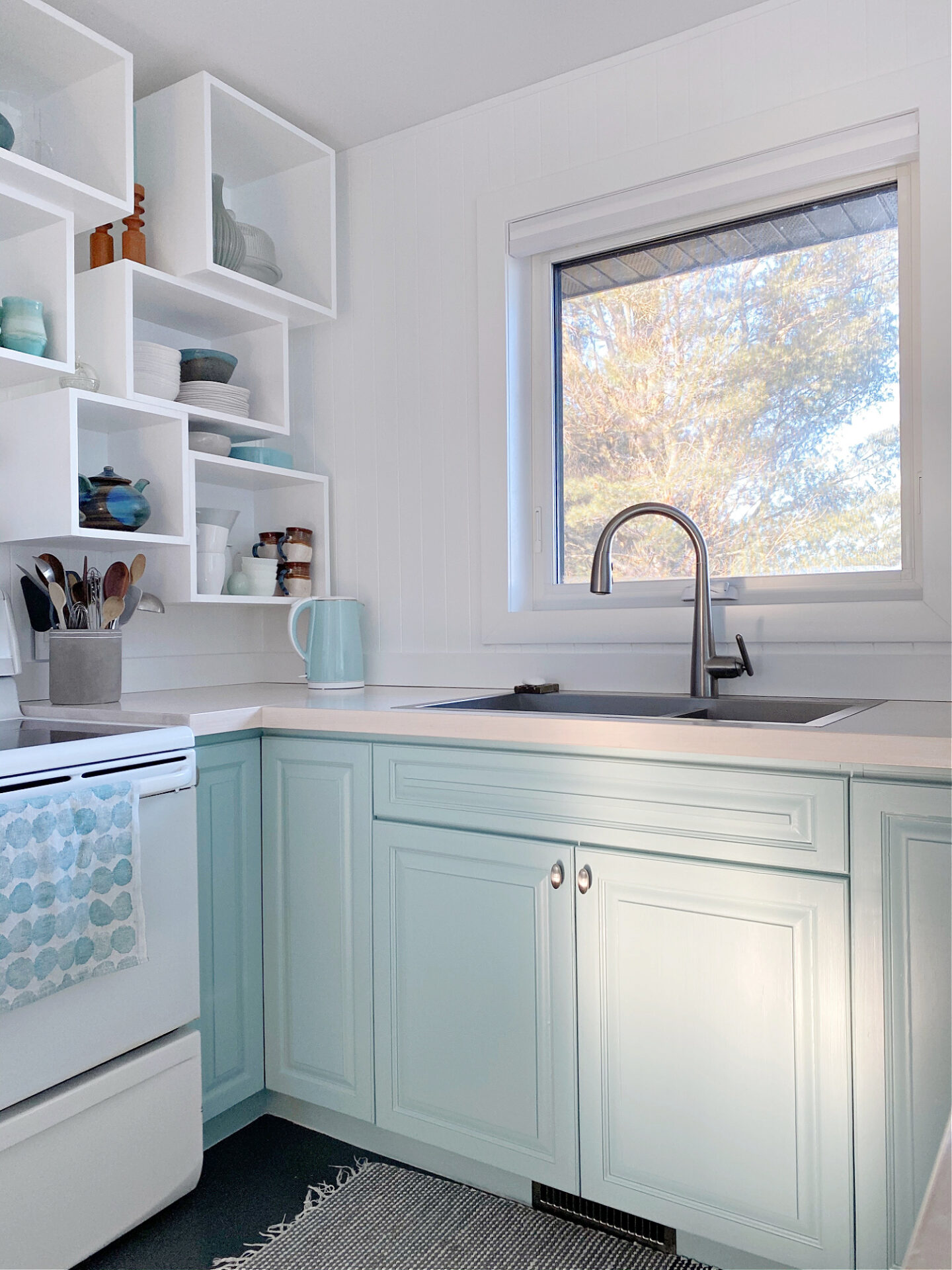
Photo Source: Danslelakehouse
My Go-To Spec Sheet for Custom Homes
After years of building, here's the combination I come back to again and again — and what we typically recommend for our builds in Fort Mill and the surrounding areas:
Ceilings: Cashmere flat enamel. Seamless, no glare from overhead lighting, beautiful depth of color.
Walls (living spaces, bedrooms, dining rooms): Cashmere low-lustre or pearl. Silky smooth finish with enough durability for everyday life.
Walls (kitchens, bathrooms, mudrooms, kids' spaces): Duration matte or satin. Tough, washable, moisture-resistant — and the matte still looks beautiful.
Trim, doors, baseboards, casings: Emerald Urethane Trim Enamel in semi-gloss. Cures rock-hard, won't yellow, cleans like a dream.
Cabinets: Emerald Urethane Trim Enamel in semi-gloss or satin. That factory-smooth, furniture-grade finish that makes kitchen cabinets look custom — because they are.
Front door or statement feature: Emerald in high-gloss — when you want drama and you want it to last.
One More Thing — Sheen and Touch-Ups
Here's something I always tell my clients: higher-sheen paints are harder to touch up seamlessly. If you nick a semi-gloss wall and try to dab over it, you'll likely see the repair. Flat and matte? Much more forgiving for touch-ups. Cashmere in particular touches up beautifully — it was one of the things our Sherwin-Williams rep confirmed, and it matches what I've seen on every job site. Keep that in mind when you're deciding what goes where. If a surface is going to need regular touch-ups — like a hallway that gets bumped by furniture or a garage entry wall — a lower sheen in Cashmere will be your friend.
And one more pro tip: always keep your leftover paint. Label the can with the room, the color name, the product line, and the sheen. Future you will be grateful.
Sheen and product selection might not be the glamorous part of a home build — but get them right, and everything else looks better. Get them wrong, and even the most gorgeous color in the world won't save you. If you're building, renovating, or just refreshing a space and want help thinking through finish selections, reach out. This is what we do every single day at The Vining Group, and I genuinely love it.
More From This Series
This is part of a series I'm writing on everything paint. Here's the rest:
How Sherwin-Williams Picks Their Color of the Year — The fascinating process behind the pick, from Milan fashion shows to nail polish at trade shows.
The Hottest White Paint Colors Right Now — My go-to whites for trim, cabinets, and walls — plus a game-changer from Sherwin-Williams' UltraWhite base.
The Hottest Paint Colors for 2026: Warm Is In, Cool Gray Is Out — The Restorative Darks and Foundational Neutrals that are taking over.
Kristin Vining is a licensed Realtor and custom home builder with The Vining Group at eXp Realty, partnered with OZ Custom Homes in Fort Mill, SC.
📧 kristin@teamvininggroup.com
🌐 teamvininggroup.com
📸 @KristinVining
|


or another way