
Categories
New constructionPublished March 11, 2026
Why Your Realtor Should Also Understand Construction

Why Your Realtor Should Also Understand Construction
And How It Can Save You Tens of Thousands of Dollars When Buying, Selling, or Building in Fort Mill, SC
By Kristin Vining | The Vining Group at eXp Realty | Fort Mill, SC
Most people think hiring a realtor and hiring a builder are two completely separate decisions. You find an agent to help you buy or sell, and if you’re building, you find a contractor separately. They operate in different worlds, speak different languages, and rarely overlap.
But here’s what I’ve learned after years of working on both sides of the transaction in the Fort Mill and Charlotte market: those two worlds collide on every single deal. Whether you’re buying a resale home, selling your current one, relocating to the Carolinas, or building from the ground up—understanding construction changes everything about how your agent can serve you.
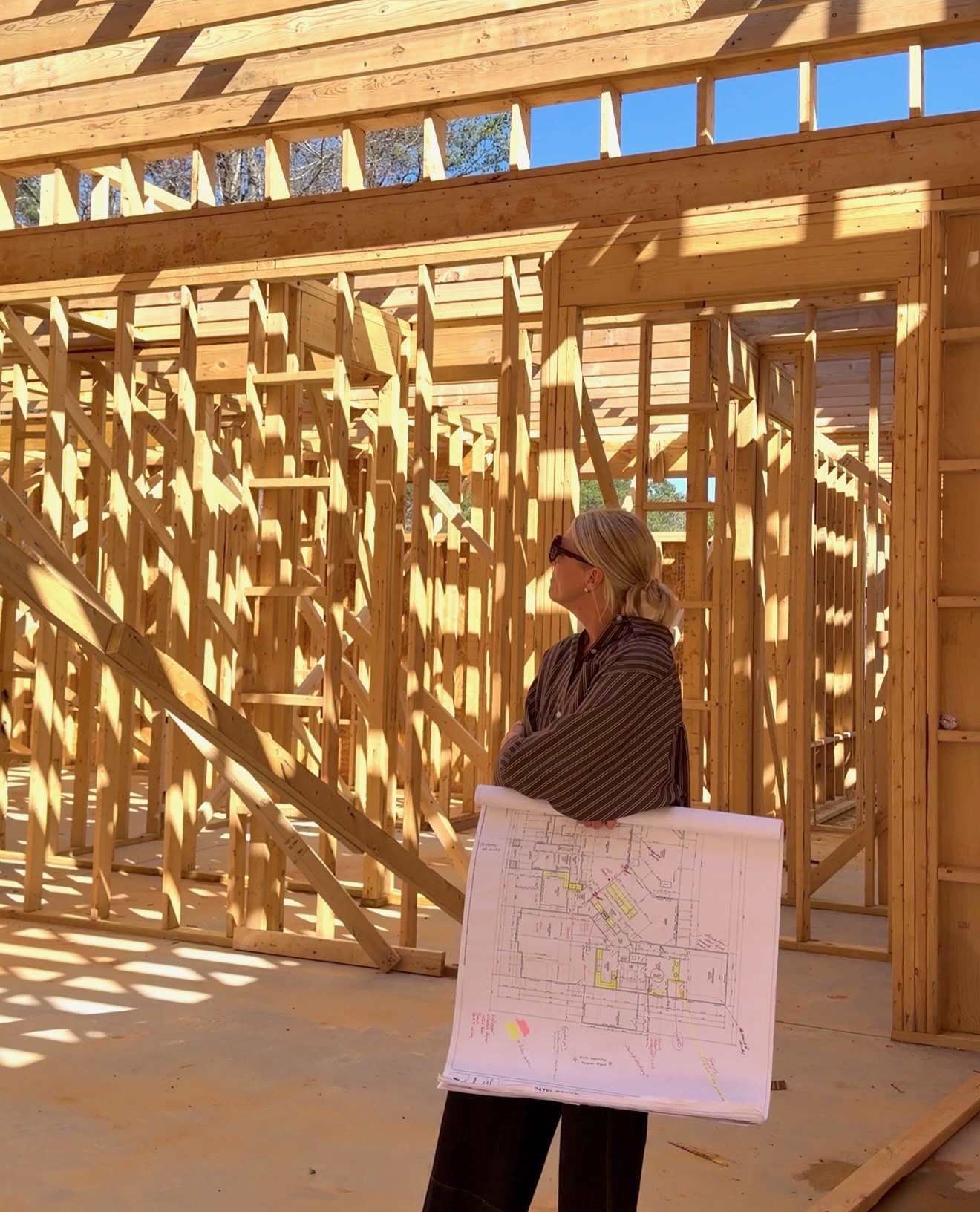
I’m Kristin Vining. I’m a licensed Realtor with The Vining Group at eXp Realty, and I’m also a custom home builder with OZ Custom Homes and Carolina Custom Creations, LLC. I don’t just show houses—I build them. I read blueprints, pull permits, manage subcontractors, price materials, and walk job sites in steel-toed boots. That combination isn’t common in this industry, and it’s the reason my clients consistently avoid costly surprises.
Here’s why that matters to you.
If You’re Buying a Home: What Most Agents Can’t See
When you walk through a home with a typical agent, they’re looking at the staging, the finishes, and the comparable sales data. All important. But a realtor with construction knowledge is looking at the bones of the house—and the bones tell you the real story.
Foundation and structural clues
Hairline cracks in a basement wall might mean nothing—or they might indicate settling that will cost five figures to fix. I’ve walked job sites where deep structural fill under a garage slab ran four feet deep, adding over $20,000 to the foundation cost alone. When I’m touring a home with a buyer, I know what to look at below the surface because I’ve literally built what’s down there.
Mechanical systems and hidden costs
Most buyers see a working HVAC system and move on. But I know that a 5,000-square-foot custom home in Fort Mill typically runs a three-zone system—and if the current home only has a single zone trying to do the work of three, you’re looking at a major upgrade after closing. Those are the kinds of details I catch because I spec these systems on new builds every week.
Renovation potential vs. money pits
Thinking about knocking out that wall to create an open floor plan? A realtor who understands construction can tell you on the spot whether that’s a simple cosmetic change or a load-bearing situation that requires engineering. I’ve seen buyers fall in love with a “fixer-upper” that looked like a $30,000 project on the surface but was really a $150,000 structural overhaul. Understanding framing, footings, and code requirements means I can give you a reality check before you write an offer—not after the inspection.
If You’re Selling: Construction Knowledge Protects Your Equity
The inspection period is where deals go to die. A buyer’s inspector flags issues, the buyer panics, and suddenly your $15,000 repair request turns into a $40,000 negotiation battle—or a failed deal entirely. A listing agent who understands construction can defuse these situations with credibility.
Pre-listing assessments that prevent surprises
Before we list your home, I walk it with a builder’s eye. I know what inspectors typically flag in York County homes—grading issues, aging roof materials, electrical panel concerns—and I can advise you on what’s worth fixing before listing versus what you can disclose and price accordingly. This isn’t guesswork. It’s based on the same assessment I’d do on my own build sites.
Negotiating repairs with authority
When a buyer comes back asking for $25,000 off because the inspector flagged an item, most listing agents either push back blindly or cave. I can look at the actual issue, give a realistic repair estimate based on current subcontractor pricing in our market, and negotiate from a position of knowledge. That’s the difference between losing $25,000 in equity and agreeing to a $4,000 repair that solves the problem.
Staging and presentation with a builder’s perspective
I know what features today’s custom home buyers are looking for—because I’m building those features right now. When we’re preparing your home for market, I can suggest targeted updates that echo what new construction buyers are seeing in communities like Wisteria Meadows, giving your resale home a competitive edge without overcapitalizing.
If You’re Building: A Realtor Who Actually Speaks the Language
This is where the difference becomes most dramatic. If you’re building a custom home in the Fort Mill or Charlotte area, your realtor should be able to do far more than just help you find a lot.
Reading and interpreting blueprints
I don’t just glance at floor plans—I create construction takeoffs from them. I can calculate the total linear feet of footings, measure brick veneer across all four elevations, estimate framing material and labor, and catch discrepancies between the plans and the budget before they become change orders. On a recent 5,500-square-foot luxury build, doing my own detailed takeoff saved the client from being blindsided by foundation costs that were initially underestimated by nearly three times the actual amount.
Understanding construction sequencing
Building a home isn’t just about materials—it’s about timing. Concrete needs to cure before framing begins. Electrical rough-in has to pass inspection before insulation goes in. York County has specific requirements that affect scheduling. I know this timeline intimately because I manage it on active builds, and that knowledge means I can help you set realistic expectations and hold your builder accountable to a schedule that makes sense.
Real cost transparency
In the Fort Mill custom home market, allowances for a 4,700-square-foot home can exceed $800,000 before you add the builder’s margin. I can walk you through where that money goes—framing, cabinetry, windows, HVAC, electrical, roofing, flooring—because I price these line items for my own builds. That means I can help you make smart allocation decisions, like understanding that spending more on windows and insulation can actually save you money over the life of the home, or knowing where you can value-engineer without sacrificing quality.
If You’re Relocating to Fort Mill: The Whole Picture Matters
Fort Mill is one of Charlotte’s fastest-growing suburbs, and for good reason. The schools are top-rated, the property taxes are significantly lower than Charlotte (thanks to South Carolina’s 4% residential assessment rate), and the community still feels like a small town with big-city access just 20 minutes up I-77.
But if you’re coming from out of state, you need a realtor who can help you navigate not just the neighborhoods but the building landscape. Relocators often face a choice: buy an existing home or build custom on one of the available lots in communities like Wisteria Meadows, The Ridge, or other premier developments in the area. A realtor with construction expertise can help you make that decision with full clarity—comparing the true cost of building versus buying, accounting for lot premiums, site preparation costs, and the timeline to completion.
I’ve helped families relocating from the Northeast, the Midwest, and the West Coast understand what their budget actually gets them in this market—and it’s almost always more than they expect.
Questions You Should Ask Any Realtor Before Hiring Them
Whether you choose to work with me or another agent, here are the questions that will help you gauge whether your realtor understands the full picture:
• Can you walk me through a construction takeoff and explain how costs are allocated?
• Have you ever managed or been involved in a new construction project?
• Can you look at a home’s foundation and tell me if there are concerns beyond cosmetic issues?
• Do you know the current cost per square foot for custom construction in this area?
• Can you evaluate whether a renovation is structurally feasible, or do you rely entirely on the inspector?
• Do you understand local building codes and permit requirements in York County and Fort Mill?
If your agent can’t answer these questions confidently, you’re potentially leaving money on the table—whether you’re buying, selling, or building.
The Bottom Line
Real estate and construction are deeply connected, but most of the industry treats them as separate silos. I believe that’s a disservice to clients. When your realtor understands how homes are actually built—how they’re framed, wired, plumbed, and finished—they can protect your investment at every stage of the process.
That’s not a sales pitch. It’s just the way I work. I show up to listings in heels and I show up to job sites in boots, and I bring the same level of detail to both.
If you’re thinking about buying, selling, or building in the Fort Mill, Indian Land, Tega Cay, Lake Wylie, Rock Hill, or greater Charlotte area, I’d love to have a conversation about how we can work together.
Kristin Vining
Realtor® | Custom Home Builder
The Vining Group at eXp Realty
Fort Mill, SC | Serving the Greater Charlotte Metro
www.teamvininggroup.com | @KristinVining
704-285-3117
|


or another way